Rockford, Illinois
Tavern On Clark vs. Chain Steakhouses
A fair question if there is a national chain nearby: why drive to an independent restaurant instead? Here is the answer in concrete terms rather than vague claims about quality and passion.
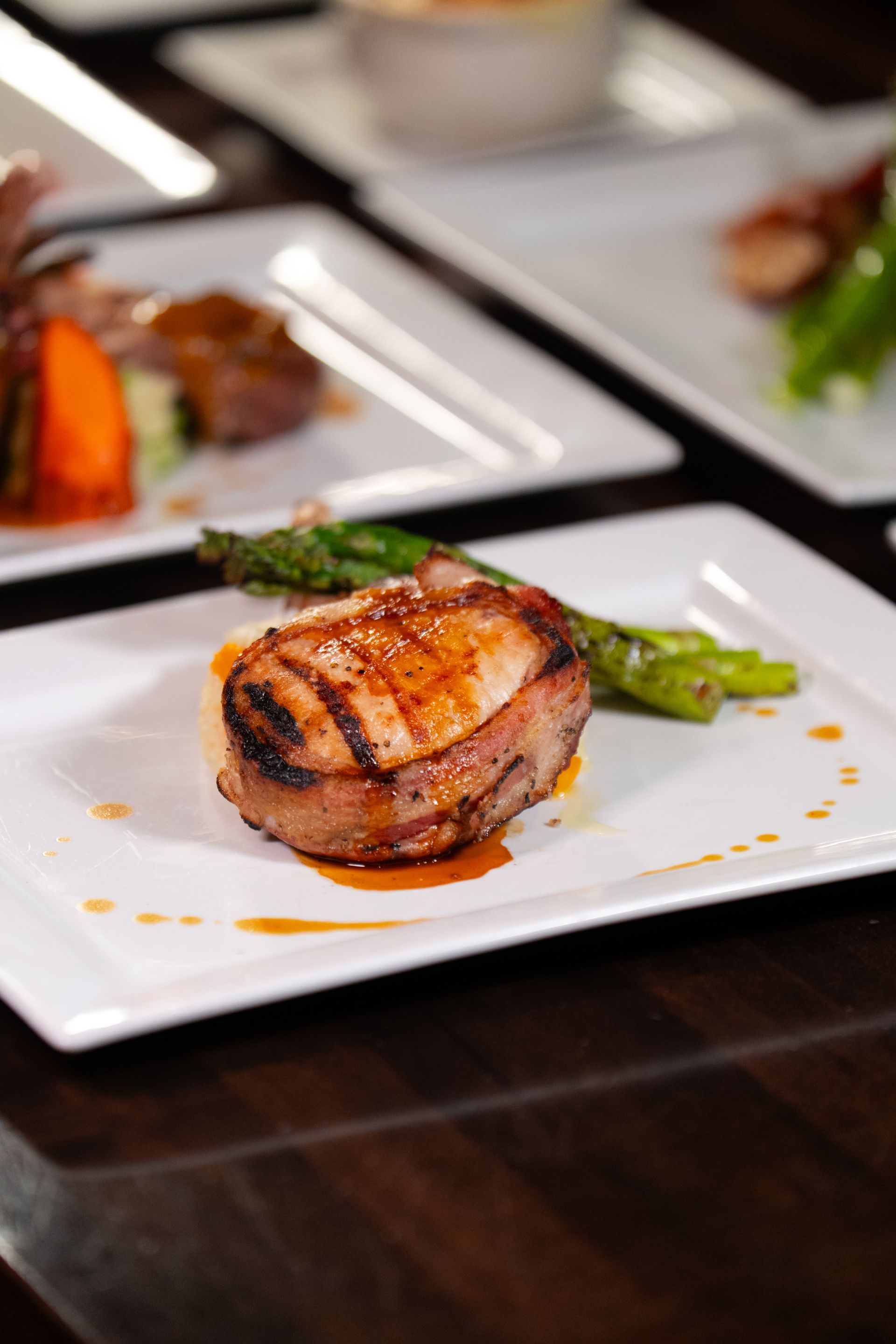
Tavern On Clark gets compared to chain steakhouses constantly, and the comparison is worth making properly — with specific differences that show up on your plate, in your bill, and in the experience from the moment you walk in.
Pull up the full menu before you read this. It makes the comparison easier to see in real terms.
The comparison Side by side
| National chain | Tavern On Clark | |
|---|---|---|
| Menu | Approved by a corporate development team, focus-grouped, engineered to reproduce across hundreds of locations. | Core menu year-round plus daily features that change with availability and season. |
| Beef | Bought at volume to hit a price point. | Certified Angus Beef, char-grilled to order. Ribeye sourced from the upper 1/3 cut. |
| Non-steak | A pasta dish or two and a salmon option that exists so they have one. | Five seafood entrées, five pastas, plus flatbreads, salads, burgers and chicken. |
| Desserts | Arrive frozen, thawed or heated to a standard process. | Eleven housemade options, all $8, made in-house. |
| Service | Trained to a script — check-in sequence, upsell phrasing, table-turn timing. | Staff know the daily features because the menu changes. Pace set by the table. |
The menu is built by a kitchen, not a committee
Every dish on a chain steakhouse menu was approved by a corporate food development team, tested in focus groups, and engineered to be reproducible at scale. That process produces consistent, predictable food. It also produces food optimized for cost, shelf life and operational simplicity — not for what actually tastes best.
The core menu here runs year-round, but the kitchen posts daily features based on what is available, what is in season, and what the chef wants to put out that day.
- Blue cheese crusted 14 oz. ribeye
- Peppercorn New York strip
- Filet mignon Oscar
- Seared duck breast
- Black garlic shrimp pasta
- Lobster tail tacos
None of those exist on a chain menu, and they cannot — the logistics of running specials across hundreds of locations do not work. Here the kitchen has the freedom to cook what is worth cooking, and that freedom shows up directly on the plate.
The steaks are a different category
Chain steakhouses serve steak. Tavern On Clark serves Certified Angus Beef, and that distinction is more meaningful than it sounds.
Certified Angus Beef is a third-party certification requiring cattle to meet specific marbling grades and quality standards that standard commodity beef does not have to meet. Buying it is a sourcing decision that prioritizes what ends up on the plate over what keeps food costs lowest. The result is steak with more marbling, deeper flavor and better texture.
The steak lineup
- Porterhouse 20 oz.
- $54
- Ribeye Upper 1/3 cut — the highest marbling section of the rib
- $39
- Filet Mignon
- $39
- New York Strip
- $39
- Tavern Steak 28-day aged
- $29
- Chopped Sirloin
- $19
- Signature crust — blue cheese, blackened or peppercorn
- $6
Every cut is Certified Angus Beef, char-grilled to order. Prices subject to change — call 815-708-7088 to confirm.
Steaks can also be upgraded with a lobster tail, shrimp or crab Oscar. The customization is real and handled by a kitchen that knows the cuts, not a line cook running a standardized protocol.
The menu has actual range
Walk into a chain steakhouse and the non-steak side of the menu is an afterthought. The kitchen is built for steak and everything else is tolerated.
Seafood entrées
- Seared Sea Scallops
- $38
- Salmon Oscar Crab meat and shrimp in béarnaise
- $29
- Shrimp and Scallops au Gratin
- $29
- New Orleans Red Snapper Garlic cream shrimp sauce
- $27
- Whiskey Shrimp
- $26
Appetizers
- Jamaican Sea Scallops
- $19
- Nori Crusted Ahi Tuna
- $16
- Crab Cakes
- $15
- Tavern Baked Brie
- $13
Those seafood dishes could anchor the meal on their own — not token alternatives to the steak section. The pasta section has five distinct dishes, and the flatbreads, salads, burgers and chicken all read like dishes somebody thought about rather than filler to make the menu look complete.
For a table where multiple people have different preferences — steak lover, seafood person, someone who just wants a great burger — the full table is handled. A chain handles the steak eater and figures the rest will manage.
The desserts are housemade
This one is simple, and it matters more than people expect. Chain desserts arrive frozen, get thawed or heated in a standardized process, and hit the table tasting exactly like what they are.
Eleven options here, all $8, all made in-house: triple chocolate cake, sea salt caramel cake, moscato berry cake, crème brûlée, tiramisu, New York cheesecake, Swiss chalet and more. The chocolate silk cake is gluten free. The hot honey peach cheesecake is the kind of thing that does not exist on a corporate dessert menu, because it takes an actual pastry kitchen to produce.
Eight dollars for a housemade crème brûlée at a steakhouse is not a normal price point. It reflects a kitchen that treats dessert as part of the meal rather than an upsell attached to the check.
The experience does not follow a script
Chain service is professional the way a hotel lobby is professional — functional, consistent and completely impersonal. There is a sequence of check-ins, a phrasing for upsells, a timing protocol for clearing plates, and a system for turning tables efficiently.
Here the staff know the menu because the menu changes. When the daily features rotate, the servers know what is on them and why. Ask which steak to order and the answer comes from actual knowledge of the cuts rather than a training module — and that difference shows up in how the meal goes from beginning to end.
The pace is set by the table, not by a system designed to move covers. Nobody is hovering to clear your plate before you have finished. A dinner here can breathe.
On price
This is the part that surprises most first-timers. Chain pricing has climbed significantly in recent years, and the perceived value of the brand often does more work than the food on the plate.
Here, the numbers are on the page above: crab cakes to start at $15, a ribeye or filet at $39, a housemade dessert at $8. Compare that against whatever your nearest chain is charging this month — the gap is smaller than most people expect, and every dollar on the check goes toward food sourced and prepared with intention rather than toward sustaining a franchise model.
For diners coming from Cherry Valley, Belvidere and the surrounding area, the math is straightforward: comparable price, meaningfully better food, a dining room that feels like a real restaurant instead of a branded box.
Common questions
- What is Certified Angus Beef?
- A third-party certification requiring specific marbling grades and quality standards that commodity beef does not have to meet. On the plate: more marbling, deeper flavor, better texture.
- Does the menu change?
- The core menu runs year-round. Daily features change with availability and season.
- Are the desserts really made in-house?
- Yes — eleven options, all $8, including a gluten-free chocolate silk cake.
- What does dinner cost?
- Steaks run $19 to $54, with the filet, ribeye and strip at $39. Desserts $8, signature crusts $6.
- Do I need a reservation?
- Recommended on weekends. Call 815-708-7088.
The bottom line
Chain steakhouses offer a predictable, standardized experience that delivers what it promises. There is nothing wrong with that if predictability is what you are after.
Tavern On Clark offers something different: daily rotating features, Certified Angus Beef sourced and cooked by a kitchen with actual discretion, housemade desserts, genuine menu range, and service from staff who know what they are serving. The comparison is not close on the food, and it is close enough on price that the choice is easy.