The Cuts · Rockford, Illinois
Best Porterhouse Steak in Rockford, IL
Two premium steaks on one bone — and the cut that separates a good steakhouse from a great one, because the bone makes it easy to get wrong.
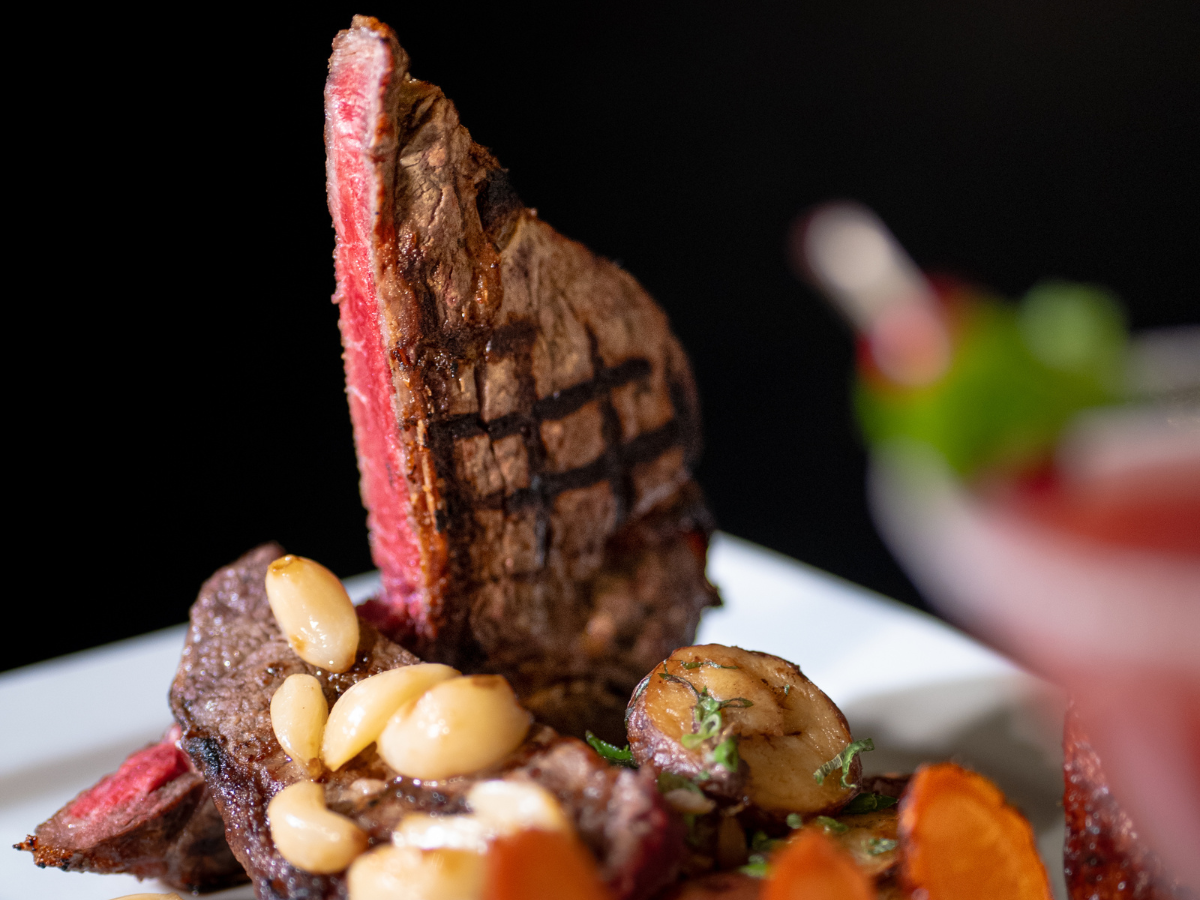
Tavern On Clark has built a reputation in Rockford as the kind of steakhouse that takes cuts like the porterhouse seriously — not as a menu checkbox, but as the main event.
Most restaurants in the Rockford area can put a steak on a plate. What they cannot all do is source the right beef, cook it with precision, and serve it in a way that justifies the price. That is the difference, and it is exactly what makes Tavern On Clark the answer when someone asks where to get the best porterhouse in Rockford. Browse the full menu to see current cuts and pricing before you head in.
What makes a porterhouse different
If you are not a regular steak eater, the porterhouse can look like a big T-bone. It is not. A porterhouse is cut from the rear of the short loin, where the tenderloin is at its widest. That gives you a full, substantial tenderloin section on one side of the bone and a thick New York strip on the other. The USDA sets a minimum size for the tenderloin portion before a steak can legally be called a porterhouse — anything smaller is just a T-bone.
One cut Two steaks
Tenderloin side
Butter-soft
The same muscle that produces the filet mignon. Delicate, lean, tender above everything else.
Strip side
Bold and beefy
A thick New York strip. Firmer texture, more pronounced flavor, a fat cap along the edge.
Alternating bites between the two sides is the point of ordering it
The catch is that it demands a skilled kitchen. The bone runs through the center and conducts heat differently than the meat around it. Get the timing wrong and one side overcooks while the other misses temperature. It is the cut that separates good steakhouses from great ones.
Why Tavern On Clark gets it right
The kitchen works with Certified Angus Beef. That is not a marketing phrase — it is a third-party certification requiring specific marbling scores, carcass size, and quality standards that the generic USDA Choice label does not mandate. More marbling means more flavor and better texture, and you taste it in every bite.
Beyond sourcing, it comes down to the cook. A porterhouse this size has to be handled differently than a six-ounce filet. The crust has to develop properly on the outside while the center reaches temperature without going past it. That balance is where a lot of kitchens fall short.
Medium-rare is the sweet spot: a warm pink center with good color throughout, natural juices still locked in, and a crust with some char and seasoning on the outside. The bone-side meat runs a touch more done by nature — that is simply how the cut works.
How to order it
Know what you want before the server asks. Here is how the doneness scale reads on a cut this thick.
Doneness on a thick cut
Ask for it rested. A steak this size needs a few minutes off the heat before it is cut into. Any kitchen worth trusting already knows that, but it does not hurt to mention it.
Sides exist to complement the steak, not compete with it. The classics are classics for a reason — sautéed mushrooms, a loaded baked potato, asparagus. Keep it simple and let the porterhouse be the thing you are eating.
Independent vs. chain
There are chain steakhouses within driving distance of Rockford, and some of them are perfectly fine. But there is a gap between fine and great, and it usually shows up in two places: sourcing and consistency.
Chain kitchens are built for volume. They are engineered to produce the same result across hundreds of locations, which means decisions about beef quality and preparation are made by committee and optimized for cost. That is not a criticism — it is the reality of how those operations work.
Independent steakhouses are built differently. Decisions about what beef to buy and how to cook it are made by people who are in the restaurant, not a corporate office. When the kitchen cares about the cut, the plate reflects it. That is the whole argument in Tavern On Clark vs. chain steakhouses.
Diners who make the drive from Cherry Valley and Belvidere are not doing it because Tavern On Clark is convenient. They are doing it because the food is worth the trip.
When the porterhouse is the right call
It is not an everyday steak. It is the one you order when something deserves a real meal — a promotion, an anniversary, a birthday, or a Tuesday when you have earned it. It is the steak you talk about on the drive home.
Common questions
- Is the porterhouse enough for two people?
- It can be, depending on appetite. A proper porterhouse is a large cut. If you are splitting it, round out the table with an appetizer and sides. If you are eating solo, come hungry.
- Do I need a reservation?
- Always smarter to call ahead, especially on weekends. Call 815-708-7088 rather than driving in from Belvidere or Cherry Valley and waiting at the bar.
- What is the best time to go?
- Weeknights are quieter if you want a relaxed pace. Weekends have more energy. The food is the same either way.
- Is it the most expensive steak on the menu?
- It is one of the premium cuts. Check the current menu for pricing — it updates with availability.